
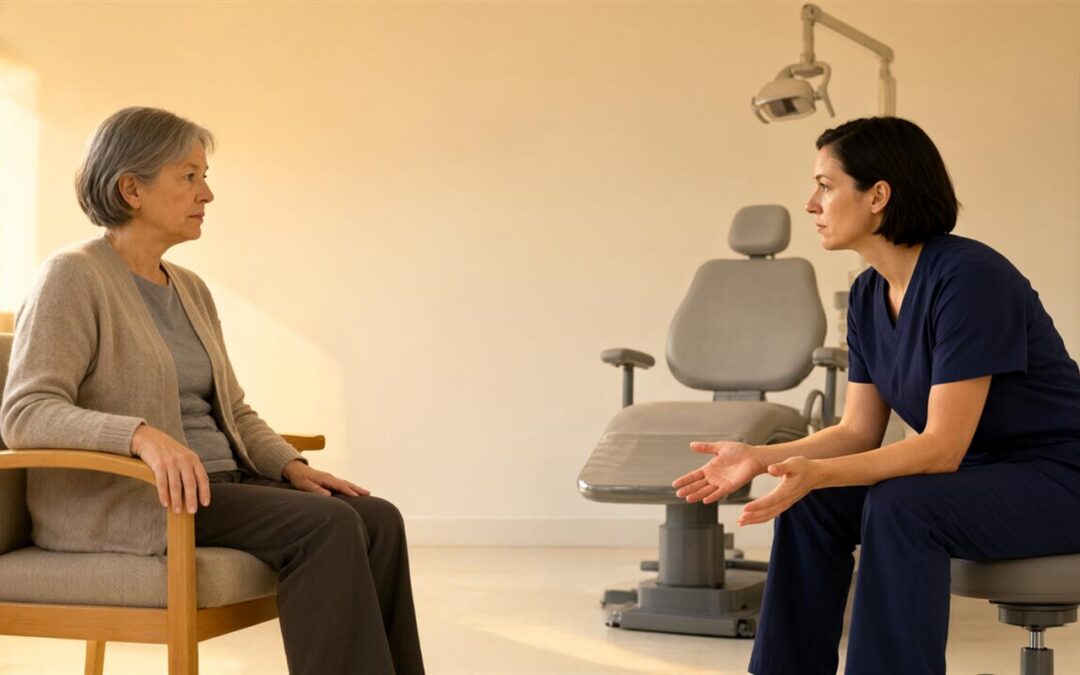
There is a moment after a tooth is lost, or scheduled for removal, when the question stops being about the tooth and starts being about the space it leaves. That space is what a bridge is built to fill, and what sits in front of you is a conversation rather than an emergency. It helps to walk in knowing what a bridge does, what it leaves alone, which questions are worth writing down, and what the first appointment will actually cover.
What a Dental Bridge Is, in Plain Terms
A bridge replaces one or more missing teeth by anchoring a substitute tooth to the teeth on either side of the gap. Those neighboring teeth carry the bridge, and the substitute sits where the missing tooth used to be, matched to the teeth around it. Unlike a partial denture, which lifts out for cleaning, a bridge stays in place and is cleaned around rather than removed.
Conversations about the dental bridges West Valley City residents bring up tend to start with the same practical question: how the replacement stays where it should. The answer sits in the teeth that hold it. Westways Dental lists bridges among its restorative and cosmetic services, alongside crowns, all ceramic crowns, dentures, implant restoration, full mouth reconstruction, and whitening, which puts a bridge in the same conversation as those options rather than apart from them.
What a Missing Tooth Sets in Motion
A gap is rarely static. The teeth beside it can drift toward the open space over time, and the tooth above or below can begin to move because there is nothing left to meet. You may notice a bite that feels uneven before anything looks different, or find yourself chewing on one side without having decided to. None of this happens overnight, which is part of why the conversation can be a calm one.
Cleaning is the other change. A gap catches food in a way a full arch does not, and the awkward angle makes it easy to skip. That’s often how a missing tooth first comes up at a routine visit, not because something hurts but because the space has become hard to keep clear.
Timing shifts the conversation a little. When the tooth is already gone, the exam happens with the gap in place and the questions are about what to do next. When a removal is already planned, the discussion can start sooner, with the teeth on either side still where they belong. Either way, the starting point is the same appointment.
What a Bridge Does Not Solve
A bridge replaces the part of the tooth you can see. It does not replace the root, or rebuild what was lost beneath the gum line. The distinction matters because a bridge rests on the teeth on either side, which makes their condition part of the plan rather than an afterthought. A bridge also says nothing about why the tooth came out, and the reason is worth knowing before anything is decided.
It isn’t the only answer either. A single missing tooth can be discussed as a bridge, an implant, or a partial denture, and each choice asks something different of the mouth around it. A separate guide to dental implants in West Valley City walks through that wider comparison, which is where the three belong side by side.
Questions to Bring to a Consultation
A written list is worth more than a good memory. The dental bridges West Valley City patients ask about in a first appointment tend to raise the same handful of practical points, and having them on paper keeps the answers straight once the conversation starts moving.
- How many teeth would the bridge span, and which teeth would carry it?
- What does the exam need to show before a plan is made?
- What happens if one of the supporting teeth has a problem later?
- How is the space under the bridge kept clean?
- What would a repair involve if the bridge is damaged?
- How long is a bridge expected to last, and what affects that?
Anyone looking at a wider gap will have a version of those questions about a partial denture too, and the guide to full and partial dentures in West Valley City covers what changes when more than one tooth is missing.
What the Exam Usually Reviews
A dental bridge dentist West Valley City residents sit down with will begin by looking at the gap and at the teeth holding it. The exam reviews the teeth on either side, the gum tissue around them, how the bite above and below meets, and any imaging the dentist decides is needed. What those images show about the supporting teeth is the part that shapes the conversation most.
The findings are then explained rather than assumed. Expect to hear which options the exam supports, which ones it sets aside, and what would need attention first if anything does. A dentist who walks through that openly hands you the material for a decision instead of making the decision for you.
What you bring to that appointment shapes it too. A short account of when the tooth was lost, what feels different when you eat, and whether anything on that side has become sensitive gives the exam somewhere to start. Small details that seem unrelated, like a change in how your teeth meet when you bite down, are often the ones that explain what the images show.
What One Visit Cannot Settle
One appointment is rarely the whole plan. A first visit produces records, answers, and a sense of direction, while the finished plan waits on how the gums look, whether another tooth needs attention first, and how much time the work will take. None of that is delay for its own sake. It’s the difference between a plan built on the mouth in front of the dentist and one built on a description of it.
It’s also fair to leave without deciding. Some people arrive ready to book, others want a week to think about the alternatives, and a consultation that ends with a question still open has done its job.
Preparing for the Appointment
Three things shorten the visit: the paperwork, the medication list, and the questions. Westways Dental asks new patients to bring dental insurance information and a current medication list, and the new-patient forms can be filled out online before the first visit, which leaves the appointment for the parts that need a person in the room.
- The new-patient forms, completed online ahead of time.
- Dental insurance information, if there is any to bring.
- A current medication list, written out rather than remembered.
- The Spanish version of the form set, if that is the easier read.
- The written list of questions, in whatever order they occurred to you.
Language, Scheduling, and Same-Day Availability
The office is bilingual. The header of the office’s website reads “Se Habla Español,” and the new-patient form set includes a Spanish version, so a conversation about a missing tooth can happen in the language it’s easiest to think in. That matters more than it sounds. The questions above are easier to ask, and the answers easier to follow, when nothing is being translated on the fly.
Booking with a dental bridge dentist West Valley City patients can call directly is one route; the online appointment request form is the other. Same-day appointments are usually available, which helps when a broken tooth or a new gap is the reason for the call. The number is (801) 969-1400, and the form asks for a preferred day if calling is awkward.
Key Takeaways
- A bridge is fixed in place and replaces the visible tooth, not the root beneath it.
- The teeth on either side carry the bridge, so their condition sets the plan.
- A gap is worth discussing before it becomes difficult to clean, not after.
- The consultation is where the exam, the options, and the questions meet.
- Forms, a medication list, and written questions make the visit more useful.
Conclusion
A missing tooth is a small space with a large number of decisions attached to it, and most of them get easier once the vocabulary is clear. A bridge is one route to closing that space, chosen or set aside after an exam rather than before one. Westways Dental has been part of the West Valley City community for going on thirteen years, and the office sees patients at 3451 S 5600 W Suite B, West Valley City, UT 84120. Questions can go to (801) 969-1400, and the restorative and cosmetic services the office lists show where a bridge sits among the other options.